Top Tax Certifications in Pakistan (2026) | Best Courses Guide
Quick Answer
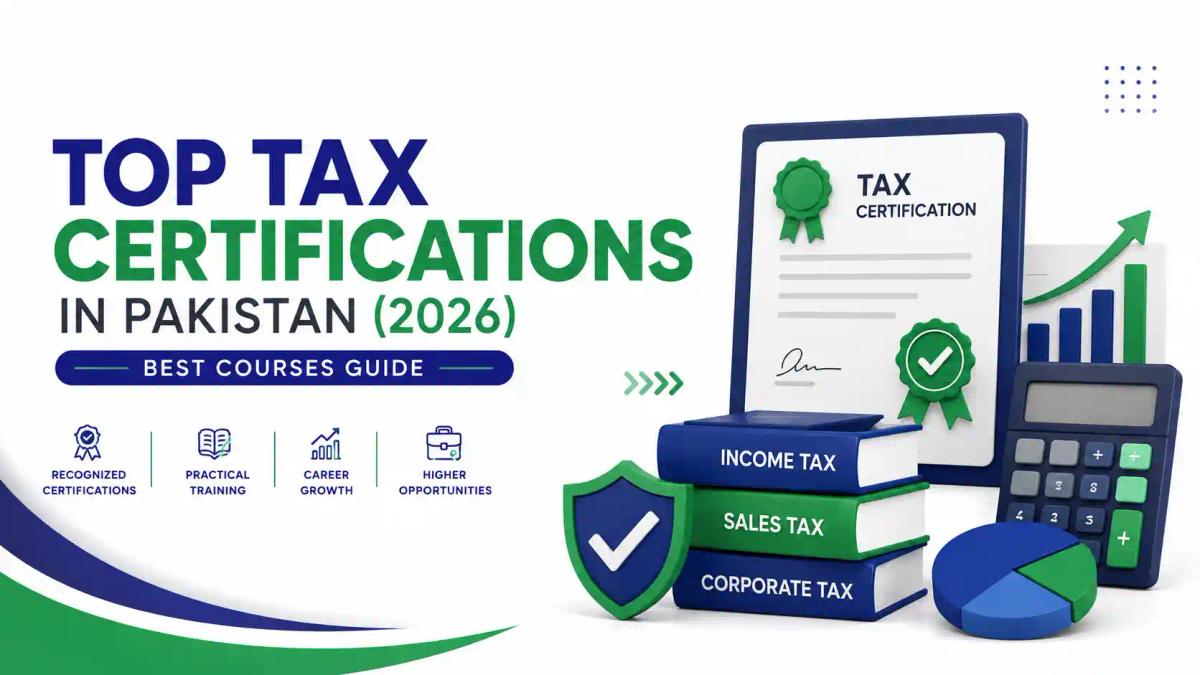
The top tax certifications in Pakistan for 2026 include the Certified Tax Advisor (CTA), Advance Taxation and Litigation (ATL), Master Sales Tax, and international programs like UK, USA, UAE, Canadian, and Saudi Taxation courses. These programs cover the Income Tax Ordinance 2001, Sales Tax Act 1990, FBR's IRIS portal, and practical filing skills — preparing students, accountants, and professionals for careers as tax consultants, tax practitioners, and corporate tax advisors.
Introduction
Pakistan's tax landscape is evolving fast, and so is the demand for qualified tax professionals. From FBR's digital transformation of the IRIS portal to growing international freelance tax work, employers and clients alike now expect practical, certified expertise — not just a degree. That's exactly why platforms like the Institute of Corporate and Taxation (ICT) have become a go-to destination for students and professionals looking to build a serious career in taxation. Whether you're comparing a Certified Tax Advisor course, exploring Master Sales Tax training, or weighing local versus international options like the UK Taxation course, this guide breaks down everything you need to know before enrolling.
Key Takeaways
- Pakistan's tax certification landscape is shifting toward practical, FBR-focused training rather than purely theoretical courses.
- A recognized tax certification can significantly improve job prospects for commerce graduates, accountants, and freelancers.
- International taxation certifications (UK, USA, UAE, Canada, Saudi Arabia) are growing in demand due to remote and freelance tax advisory work.
- Choosing the right institute matters as much as choosing the right course — look for practical IRIS training, updated curriculum, and industry-experienced trainers.
- Tax professionals with certification and hands-on filing experience typically have stronger, more stable career trajectories than those with theory-only backgrounds.
Table of Contents
- Introduction
- Why Tax Certifications Matter in Pakistan
- Types of Tax Certifications Available in Pakistan
- Top Tax Certification Courses in Pakistan (2026)
- Local vs International Tax Certifications
- What You'll Learn: Core Curriculum Overview
- Eligibility Requirements
- Course Duration and Fee Expectations
- Career Scope and Job Roles After Certification
- How to Choose the Best Tax Certification Institute
- Common Mistakes Students Make
- Latest Trends and Regulatory Updates (2026)
- Expert Tips for Success
- FAQs
- Conclusion
Why Tax Certifications Matter in Pakistan
Direct answer: Tax certifications matter because Pakistan's tax system is complex, frequently updated, and increasingly digitized — employers need professionals who can actually file returns, handle FBR notices, and advise clients, not just recite tax theory.
A university degree in commerce or accounting teaches tax law conceptually. It rarely teaches you how to actually navigate FBR's IRIS portal, respond to a Section 114 notice, or prepare a corporate sales tax return under real deadlines. This gap is exactly what certification programs are designed to close — with hands-on practice, real filing scenarios, and updated content that reflects current FBR rules.
For business owners and freelancers, understanding taxation isn't optional either — it directly affects compliance, penalties, and profitability. Many entrepreneurs now take short courses just to manage their own NTN registration and filer status confidently.
Types of Tax Certifications Available in Pakistan
Broadly, tax certifications in Pakistan fall into three categories:
| Category | Focus | Best For |
|---|---|---|
| Foundational Tax Courses | Income tax basics, filer status, NTN, ATL | Students, beginners, freelancers |
| Professional/Advanced Certifications | Corporate tax, litigation, sales tax, audits | Accountants, consultants, working professionals |
| International Tax Certifications | UK, USA, UAE, Canadian, Saudi tax systems | Freelancers, remote workers, global career seekers |
Each category serves a different career stage, and many professionals progress through more than one over time — starting with a foundational course before moving into Advance Taxation and Litigation or an international specialization.
Top Tax Certification Courses in Pakistan (2026)
Below are the leading tax certification options currently shaping the market:
1. Certified Tax Advisor (CTA)
A comprehensive program covering direct and indirect tax, tax planning, and advisory skills. It's widely regarded as one of the best taxation courses in Pakistan for building a client-facing consultancy career. Learn more about career opportunities after becoming a Certified Tax Advisor.
2. Advance Taxation and Litigation (ATL)
Designed for those who want to go beyond filing and into representing clients during FBR audits and litigation matters.
3. Master Sales Tax
A specialized certification focused entirely on sales tax registration, return filing, and audits — highly relevant for professionals working with corporate sales tax compliance.
4. UK, USA, UAE, Canadian & Saudi Taxation Courses
International certifications like the USA Taxation course, UAE Taxation course, Canadian Taxation course, and Saudi Taxation course prepare Pakistani professionals for remote and freelance tax advisory roles with international clients.
5. Certified Customs Clearance & Litigation Professional (CCCLP)
A niche but growing certification for those interested in import-export tax compliance, complementing courses like Master Import & Export.
6. Enrolled Agent (EA) Course
Relevant for those targeting US-based tax advisory work, often paired with the USA Taxation course for a stronger international profile.

Local vs International Tax Certifications
Direct answer: Local certifications (like CTA or Master Sales Tax) prepare you for Pakistan's domestic tax market, while international certifications (UK, USA, UAE, Canada) open doors to freelance and remote advisory work with overseas clients — many professionals eventually pursue both.
| Factor | Local Certification | International Certification |
|---|---|---|
| Primary Market | FBR, domestic firms | Freelance, remote clients, overseas firms |
| Regulatory Focus | Income Tax Ordinance 2001, Sales Tax Act 1990 | HMRC, IRS, ZATCA, CRA rules |
| Career Path | Tax consultant, practitioner, in-house advisor | Freelance tax advisor, remote consultant |
| Growth Trend | Stable, steady demand | Rapidly growing with freelance tax services |
Many students now combine both — starting with a domestic certification like CTA, then adding an international specialization such as the UK Taxation course to widen their client base.
What You'll Learn: Core Curriculum Overview
Most reputable tax certification programs in Pakistan cover:
- Income Tax Ordinance 2001 and Sales Tax Act 1990 fundamentals
- NTN registration and Active Taxpayer List (ATL) status
- Practical IRIS portal training
- Income tax return preparation and filing
- Sales tax registration, returns, and audits
- Withholding tax and advance tax mechanics
- Corporate tax compliance and SECP annual filings
- Tax audit response and litigation basics
- Software tools commonly used by tax professionals
Eligibility Requirements
Direct answer: Most tax certification courses in Pakistan don't require a specific degree — B.Com, BBA, MBA, M.Com graduates, CA/ACCA/CMA students, lawyers, and even non-finance professionals can enroll, though some advanced courses recommend basic accounting knowledge.
- Foundational courses: Open to all backgrounds, including fresh graduates and career-switchers.
- Advanced/professional courses: Basic understanding of accounting or prior tax exposure is helpful but not always mandatory.
- International tax courses: No formal prerequisite, though comfort with English-language tax terminology helps.
Course Duration and Fee Expectations
Duration typically ranges from a few weeks for short/foundational courses to a few months for advanced or international certifications, depending on depth and practical training hours. Fees vary by institute, course level, and whether training is delivered online or in-person — it's best to compare online vs physical tax courses and request current fee details directly from your chosen institute, since pricing is regularly updated to reflect curriculum changes.
Career Scope and Job Roles After Certification
Direct answer: After certification, professionals commonly work as tax consultants, tax practitioners, corporate tax advisors, sales tax specialists, freelance tax preparers, or compliance officers — with growing demand in both domestic firms and international freelance markets.
Common roles include:
- Tax Consultant / Tax Advisor
- Sales Tax Specialist
- Corporate Tax Analyst
- Freelance Tax Preparer (local and international clients)
- Tax Compliance Officer
- Independent Tax Practitioner / Firm Owner
For a deeper look at earning potential and growth trajectory, see tax advisor salary and scope in Pakistan 2026 and tax skills salary comparison across USA, UK, UAE, Saudi.
Many graduates also choose to start their own tax preparation business or build a freelance practice via platforms discussed in tax services on Fiverr/Upwork Pakistan 2026.
How to Choose the Best Tax Certification Institute
Direct answer: Choose an institute that offers practical IRIS filing training, updated FBR-compliant curriculum, experienced instructors, and recognized certification — not just theoretical classroom lectures.
Checklist for evaluating institutes:
Practical, hands-on IRIS and FBR filing training
Curriculum updated for 2026 tax law changes
Trainers with real industry/practitioner experience
Verifiable certification (check certificate verification options)
Positive student outcomes and career support
Flexible learning formats (online/physical)
If you're based in the capital, resources like best tax training institute in Islamabad and best taxation institute in Islamabad offer a good starting comparison.
Common Mistakes Students Make
- Choosing a course based on price alone, without checking practical training content
- Skipping IRIS portal practice and focusing only on theory
- Ignoring updates to tax law, leading to outdated knowledge
- Not verifying whether the certification is recognized by employers
- Underestimating the value of FBR-focused practical training versus generic accounting courses
Latest Trends and Regulatory Updates (2026)
Pakistan's tax environment continues to shift toward digital compliance. Key developments shaping certification content in 2026 include the rollout of FBR's digital invoicing system, updates from the 2026 federal budget, evolving IRIS 2.0 procedures, and increasing use of AI tools in tax preparation — a trend explored further in AI in taxation: tools, risks and opportunities. Staying current with these changes is one of the biggest reasons professionals renew or upgrade their certifications regularly.
Expert Tips for Success
- Prioritize practice over memorization — actually file a sample return during training.
- Stay updated every tax year — rules change annually; treat certification as a starting point, not a finish line.
- Specialize early — sales tax, corporate tax, or international tax each open different career doors.
- Build a portfolio — even freelance or volunteer filing experience strengthens your resume.
- Network with practicing consultants — mentorship accelerates real-world competence far faster than coursework alone.
Why Choose ICT for the Best Tax Certifications in Pakistan?
The Institute of Corporate & Taxation (ICT) is a trusted choice for individuals looking to build a successful career in taxation, accounting, and finance. ICT offers industry-relevant tax certification programs that combine theoretical knowledge with practical training in FBR IRIS, Income Tax, Sales Tax, Corporate Tax, tax compliance, and tax return filing. Designed for students, graduates, accountants, and working professionals, these courses are delivered by experienced trainers using real-world case studies to develop job-ready skills. Whether you want to become a tax consultant, improve your professional expertise, or stay updated with Pakistan's evolving tax laws, ICT provides career-focused training that helps you gain practical experience and enhance your employment opportunities in the taxation sector.
FAQs
Q1: What is the best tax certification course in Pakistan for beginners?
For beginners, a foundational course covering NTN registration, filer status, and basic IRIS filing is ideal before moving to advanced certifications like CTA.
Q2: Can I take a tax certification course while working full-time?
Yes, most institutes offer flexible or online course formats designed for working professionals.
Q3: Do I need an accounting background to enroll?
No, most foundational and even several advanced tax courses accept students from law, business, and general commerce backgrounds.
Q4: Are international tax certifications useful if I plan to work in Pakistan?
Yes — many domestic firms and multinational companies value professionals who understand cross-border and international tax frameworks alongside local law.
Q5: How long does it take to become a certified tax consultant in Pakistan?
Timelines vary by course depth and format; foundational courses can be completed in weeks, while comprehensive professional certifications take longer to cover advanced topics thoroughly.
Q6: Is taxation a good career choice in Pakistan in 2026?
Yes — demand for certified, practically-trained tax professionals continues to grow as FBR digitizes compliance processes and more businesses require ongoing tax advisory support.
Q7: What software do tax professionals in Pakistan commonly use?
Beyond the IRIS portal, professionals often work with tools like Excel, QuickBooks, Xero, Odoo, and ERP systems such as SAP for corporate tax compliance.
Q8: Can a tax certification help me start my own consultancy?
Yes — many graduates use their certification and practical filing experience to launch independent tax practices or freelance services.
Conclusion
Choosing the right tax certification in Pakistan comes down to matching your career goals with the right level of practical training — whether that's a domestic-focused program like the Certified Tax Advisor course, a specialized track like Master Sales Tax, or an international certification opening doors to global freelance work. With Pakistan's tax system becoming increasingly digital and regulation-heavy, certified, hands-on expertise is no longer optional for anyone serious about a career in taxation.
If you're ready to take the next step, explore the practical, FBR-focused programs offered at ICT's course catalog and book a seat at ICT to start building a career-ready tax skillset in 2026.
Comments (0)
No comments yet. Start the conversation!
Leave a Reply
Your email address will not be published. Required fields are marked *