Remote Tax Jobs 2026: Complete Careers & Salary Guide
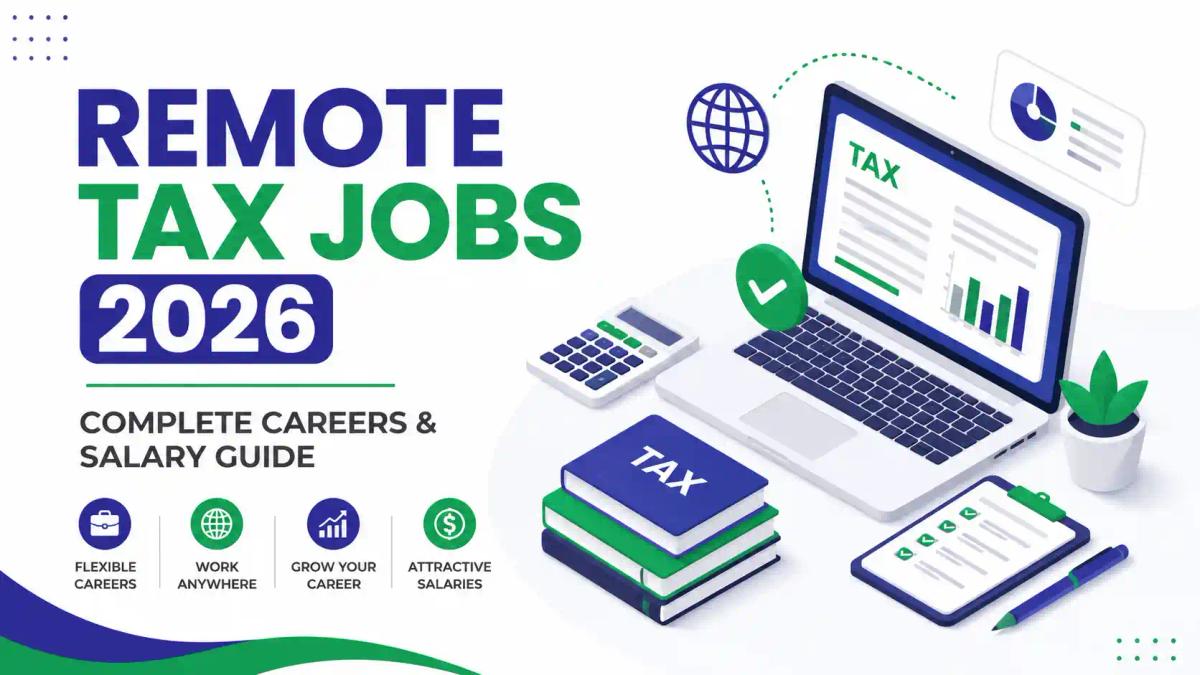
If you've been searching for remote tax jobs, you've probably noticed something interesting: taxation is one of the few professional fields where you can build a genuinely global, high-paying career without ever stepping into a physical office. From remote tax accountant jobs in the USA to remote tax consultant jobs serving clients in the UAE, the demand for skilled, home-based tax professionals has exploded — and Pakistan has become one of the biggest talent hubs feeding this demand.
At ICT (Institute of Corporate and Taxation), we've watched thousands of students move from confusion about "where do I even start" to landing work from home tax jobs with international clients, simply by pairing the right certification with the right platform strategy. Whether you're an ACCA finalist, a CA article student, a fresh commerce graduate, or someone completely new to finance, remote tax work is more accessible today than it has ever been.
This guide walks you through everything: what remote tax jobs actually look like, why they matter so much for Pakistani professionals right now, the skills and tools you need, real salary numbers, and a practical roadmap to get hired — including how ICT's taxation courses can shorten your learning curve. We'll also look at why choosing ICT for your training matters, and how our advanced taxation and litigation programs prepare you for higher-paying, specialized remote roles.
Let's get into it.
What Are Remote Tax Jobs?
Remote tax jobs are tax preparation, advisory, compliance, or consulting roles that can be performed entirely online — no physical office required. This includes remote tax preparation jobs, remote corporate tax jobs, remote international tax jobs, and freelance tax consultant jobs working with clients or firms based in the USA, UK, UAE, Saudi Arabia, Canada, and beyond.
In short: if you understand tax law, tax software, and compliance filing, you can work for a firm in New York or Dubai while sitting in Lahore, Islamabad, or Karachi.
What Is a Remote Tax Job, Really?
A remote tax job covers a wide range of responsibilities depending on your specialization:
- Tax preparation – filing individual or business income tax returns
- Tax compliance – ensuring clients meet local and international tax regulations
- Tax advisory – helping businesses plan and minimize legal tax liability
- Tax audit support – assisting with documentation during audits
- Payroll tax processing – managing employee withholding and reporting
- International/cross-border taxation – handling transfer pricing, double taxation treaties, and multi-jurisdiction filings
These roles exist across USA Taxation, UK Taxation, UAE Taxation, Saudi Taxation, and Canadian Taxation systems — each with its own rules, software, and certification pathways. That's exactly why ICT built dedicated country-specific programs: our USA Taxation course, UK Taxation course, UAE Taxation course, Saudi Taxation course, and Canadian Taxation course each teach the exact frameworks employers are hiring for right now.
Step-by-Step Guide: How Remote Tax Jobs Actually Work
- A firm or client needs tax support — usually a US CPA firm, UK accounting practice, UAE business, or freelance client needing return filing or advisory.
- They hire remote talent through platforms like LinkedIn, Indeed, Upwork, or direct referrals — often specifically targeting professionals trained in relevant tax law.
- You receive client documents digitally — bank statements, invoices, payroll data, prior returns — through secure cloud portals.
- You use tax software (QuickBooks, Xero, SAP, Oracle NetSuite, or country-specific systems like IRS e-file tools or FBR's IRIS portal) to prepare and review filings.
- You communicate via video calls, email, or Slack for clarifications and advisory sessions.
- You submit returns or reports before the relevant deadline, then handle any follow-up queries from tax authorities like the IRS, HMRC, CRA, ATO, or FBR.
Tips for Getting Comfortable With Remote Workflows
- Set up a distraction-free workspace with reliable internet — client trust depends on consistency.
- Learn at least two major accounting platforms (QuickBooks and Xero are the most requested globally).
- Keep a folder system per client to avoid mixing sensitive tax documents.
- Always confirm time zones before scheduling advisory calls with US, UK, or UAE clients.
Why Remote Tax Jobs Matter — Especially in Pakistan
Pakistan produces an enormous number of finance and commerce graduates every year, but local job markets are often saturated and salaries can be modest compared to global standards. Remote tax work solves this in three ways:
1. Currency advantage. Earning in USD, GBP, or AED while living in Pakistan means your purchasing power is significantly higher than a local-market salary would provide.
2. Global demand outpaces global supply. Countries like the USA, UK, Canada, and UAE face a persistent shortage of qualified tax preparers, especially during tax season. Firms are actively looking for remote tax specialist jobs candidates overseas who can work asynchronously or during their business hours.
3. Low entry barrier compared to migration. You don't need a visa, relocation budget, or years of waiting — just the right certification and a laptop.
Our blog on how Pakistanis are building global tax careers breaks down real examples of professionals doing exactly this, and our piece on why UAE companies prefer Pakistani tax professionals explains the specific reasons Gulf employers are hiring locally-trained talent.
Key Skills, Tools, and Benefits of Remote Tax Careers
Skills Employers Actually Look For
- Strong understanding of income tax, corporate tax, sales tax/VAT/GST, and payroll tax
- Familiarity with international tax concepts like transfer pricing and double taxation relief
- Attention to detail and documentation accuracy
- Client communication and advisory skills (not just number-crunching)
- Time management across different time zones and tax seasons
Tools You Should Know
| Tool/Software | Common Use |
|---|---|
| QuickBooks | US/Canada small business accounting & tax prep |
| Xero | UK/Australia cloud accounting |
| SAP / Oracle NetSuite | Corporate-level tax and ERP management |
| FBR IRIS Portal | Pakistan tax filing (useful if serving Pakistani/expat clients) |
| Excel (Advanced) | Data analysis, reconciliation, reporting |
If Excel isn't already a strength, ICT's Master Advanced Excel course and Certified Data Analyst course are excellent supporting credentials — many remote tax roles now expect basic data analysis alongside pure tax knowledge.

Benefits of Going Remote
- Flexible hours (within reason during peak filing seasons)
- Location independence — work from home, a co-working space, or while traveling
- Higher earning potential through USD/GBP/AED-denominated contracts
- Diverse client exposure — working across US, UK, UAE, Saudi, and Canadian tax systems builds a stronger, more marketable resume than single-market experience
Job Scope, Salary, and Demand for Remote Tax Professionals
The scope for remote tax careers is genuinely broad right now. Demand spikes seasonally (US tax season runs roughly January–April, UK self-assessment deadlines fall in January, and UAE corporate tax deadlines have become a major driver since UAE introduced corporate tax) but year-round positions in compliance, advisory, and bookkeeping remain steady.
Approximate remote tax salary ranges (these vary by client, experience, and country of hire, so treat them as general benchmarks, not guarantees):
- Entry-level remote tax preparer / associate: modest hourly rates while building a portfolio, often rising quickly with proven accuracy and speed
- Mid-level remote tax consultant/analyst: competitive monthly income comparable to or exceeding local senior accounting roles in Pakistan
- Senior remote tax advisor/manager (CTA-certified or specialized in international tax): the highest tier, often working directly with firms or high-value freelance clients on retainer
Our detailed blog on tax advisor salary and scope in Pakistan for 2026 and tax skills salary comparison across USA, UK, UAE, and Saudi Arabia go deeper into specific numbers by specialization.
Demand is also shifting toward new hybrid roles — our post on new tax careers in 2026 shaped by digital compliance covers emerging positions combining tax knowledge with automation and e-invoicing systems, which is increasingly relevant as countries move toward digital tax reporting.
Why Choose ICT — And How to Learn (Free + Paid Resources)
Getting a remote tax job isn't just about knowing tax theory from a textbook — employers want practical, filing-ready skills. This is exactly the gap ICT was built to close.
Why Choose ICT
- Country-specific specialization: separate, deep courses for UK Taxation, USA Taxation, UAE Taxation, Saudi Taxation, and Canadian Taxation, rather than one generic "international tax" overview.
- Practical, filing-focused training rather than theory-only lectures — you learn on real forms and real software workflows.
- Certified Tax Advisor (CTA) program for those wanting a comprehensive, career-defining credential — see the Certified Tax Advisor course.
- Advanced Taxation and Litigation (ATL) for professionals aiming at dispute resolution, audits, and higher-stakes advisory work — check the Advance Taxation and Litigation course.
- Specialized sales tax and customs training through the Master Sales Tax course and Customs Clearance course, useful for professionals targeting indirect tax and trade-related remote roles.
Read our full breakdown of why ICT is considered a top institute for taxation training in Islamabad for a closer look at our teaching approach and student outcomes.
Free Resources to Start Learning
- Government portals: IRS.gov, HMRC's official guidance, CRA and FBR websites (for understanding real regulatory language)
- YouTube channels covering QuickBooks and Xero basics
- Free introductory content on platforms like Coursera, which offers foundational accounting and tax courses from accredited universities — a solid starting point before specializing
Paid, Structured Learning
Free resources are great for orientation, but structured, certified training is what actually gets you shortlisted for remote tax accountant jobs and remote tax consultant jobs. A certification signals to international clients and firms that you understand a specific tax jurisdiction properly — not just general accounting.
Beyond taxation itself, many remote-ready professionals also strengthen their profile with complementary certifications like the AI-Driven CFO course, Company Secretary course, or Certified Business Advisor course — these expand your remote service offerings beyond pure tax filing into broader financial consulting, which often commands higher freelance rates.
Real-World Examples: How People Actually Land Remote Tax Jobs
Example 1 – The Freelance Route. A commerce graduate with no prior job experience completes a focused US Taxation certification, builds a small Upwork profile specializing in individual tax return preparation, and within a few months is handling seasonal filing work for small US-based clients — entirely from home.
Example 2 – The Corporate Remote Route. An ACCA-affiliate professional trained in UK Taxation and VAT compliance gets hired as a remote tax analyst by a UK accounting outsourcing firm that specifically recruits Pakistan-based talent for cost-efficient, time-zone-compatible support.
Example 3 – The Specialist Route. A CTA-certified consultant focusing on UAE corporate tax registration builds a retainer-based freelance practice, helping small UAE businesses navigate the relatively new corporate tax regime — a niche created almost entirely by regulatory change.
These aren't unusual outcomes; they reflect a consistent pattern documented across dozens of ICT student journeys, including the practical roadmap in our freelancer-to-tax-consultant 2026 guide and the platform-specific advice in top freelancing platforms for US taxation experts.
If you're wondering where to actually find these openings, our guide on using tax freelancing platforms like Fiverr and Upwork from Pakistan is a practical starting point alongside job boards like LinkedIn, Indeed, Glassdoor, FlexJobs, Remote.co, and We Work Remotely.
Future Career Opportunities in Remote Taxation
The remote tax field isn't static — it's evolving quickly alongside technology and global tax reform:
- AI-assisted tax preparation is changing workflows, not eliminating jobs. Professionals who understand both tax law and how to work alongside AI tools will be the most valuable. Our article on AI in taxation — tools, risks, and opportunities explores this shift in detail, and will AI replace tax consultants tackles the question directly.
- Digital invoicing and e-invoicing mandates across Pakistan, Saudi Arabia (ZATCA), and other markets are creating demand for professionals who understand both tax compliance and digital systems.
- Cross-border and international tax specialization will keep growing as more businesses operate across multiple jurisdictions, increasing demand for remote international tax jobs and remote corporate tax jobs.
- Data-literate tax professionals — those combining tax knowledge with tools like Excel and basic data analysis — will have an edge, which is why pairing a taxation certification with something like ICT's Certified Data Analyst course is becoming a smart long-term strategy.
For a broader look at where the profession is heading, see our forecast on the evolution of tax careers through 2026 and beyond.
Frequently Asked Questions
1. What are remote tax jobs?
Remote tax jobs are tax preparation, compliance, and advisory positions performed entirely online for clients or firms based anywhere in the world, without requiring a physical office.
2. How can I get a remote tax job with no prior experience?
Start with a focused, practical certification in one tax jurisdiction (like US or UK taxation), build a small portfolio through freelance platforms, and gradually take on more complex clients as you gain confidence and reviews.
3. Are remote tax jobs legitimate?
Yes. Many established accounting firms in the US, UK, Canada, and UAE actively hire remote staff, especially during peak tax season, to manage workload cost-effectively. Legitimate opportunities are found on platforms like LinkedIn, Indeed, and specialized outsourcing firms.
4. Which qualifications help most for remote tax jobs?
Country-specific taxation certifications (US, UK, UAE, Saudi, or Canadian), combined with practical software skills in QuickBooks or Xero, are typically more valuable to remote employers than a general accounting degree alone. Credentials like CPA, ACCA, CA, or a Certified Tax Advisor (CTA) designation strengthen your profile further.
5. How much do remote tax consultants earn?
Earnings vary widely by experience, jurisdiction, and client type, but professionals working with USD or GBP-denominated clients typically earn significantly more than equivalent local-market roles in Pakistan. Specialized and certified consultants tend to command the highest rates.
6. Do remote tax jobs require constant availability during a specific time zone?
Not always — many roles are asynchronous, especially for return preparation and document review. Advisory or client-facing roles usually require some overlap with the client's business hours.
Conclusion: Your Next Step Toward a Remote Tax Career
Remote tax jobs represent one of the most realistic paths for Pakistani finance professionals to earn international-level income without leaving home. But the difference between people who land these roles and people who stay stuck applying endlessly comes down to one thing: practical, jurisdiction-specific skills that employers can trust immediately.
That's the entire philosophy behind ICT's taxation programs — from UK Taxation and USA Taxation to the comprehensive Certified Tax Advisor course and specialized Advance Taxation and Litigation program. You don't need to guess your way into a remote tax career — you need the right training, applied the right way.
Book a seat at ICT today and take your first real step toward a remote tax career that pays in dollars, pounds, or dirhams — while you work from home in Pakistan.
Comments (0)
No comments yet. Start the conversation!
Leave a Reply
Your email address will not be published. Required fields are marked *