
Complete IRIS Tax Refund Process in Pakistan 2026 Guide
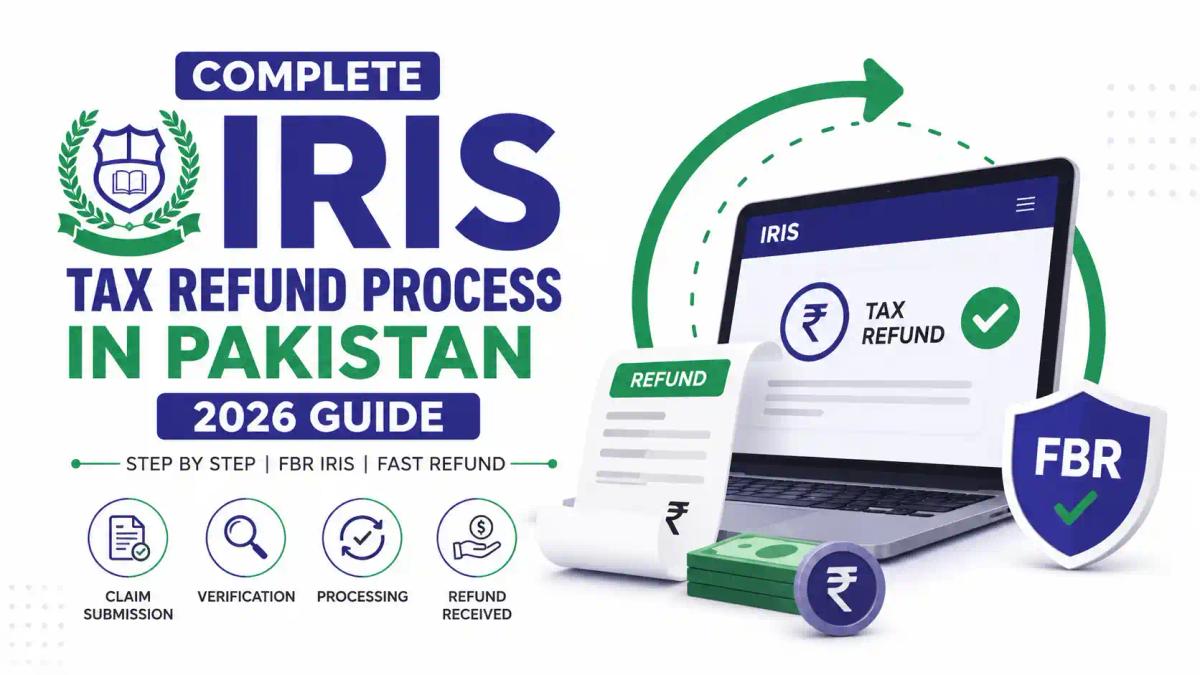
If you've ever logged into the FBR IRIS portal and wondered why your refund is "stuck," you're not alone. Every year, thousands of salaried employees, freelancers, and business owners in Pakistan overpay tax through withholding tax, advance tax, or adjustable tax — and never claim it back simply because the IRIS tax refund process feels confusing. At the Institute of Corporate and Taxation (ICT), we get asked about this almost daily, both by students in our Certified Tax Advisor (CTA) course and by working professionals who just want their money back. This guide breaks down the entire FBR IRIS refund process for 2026 in plain language — no jargon, no guesswork. Whether you're a salaried person, a small business, or someone learning taxation through our Advance Taxation and Litigation (ATL) program, you'll walk away knowing exactly how to claim, track, and receive your refund from the Federal Board of Revenue. And if you're serious about mastering FBR systems professionally, our best tax training institute in Islamabad page shows how ICT turns this kind of practical knowledge into a real career.
What Is the IRIS Tax Refund Process?
In simple terms, the IRIS tax refund process is the official method through which taxpayers in Pakistan recover excess tax paid to the government during a tax year. This happens when the tax deducted at source — through withholding tax, advance tax, or adjustable tax — is higher than your actual tax liability calculated in your income tax return.
Here's the short version:
- File your annual income tax return through the FBR IRIS portal.
- If your total tax paid exceeds your calculated tax liability, IRIS automatically shows a refundable amount.
- Submit a formal refund application (Form 170) through IRIS.
- FBR verifies your CNIC, bank account, and tax records.
- Once approved, the refund is credited directly to your registered bank account.
That's the process in a nutshell — but each step has details that determine whether your refund is approved quickly or delayed for months. Let's go through them properly.
Before submitting your IRIS tax refund application, it is important to verify your tax calculations, taxable income, and withholding tax details to avoid errors that could delay your refund. Using reliable online tools can help you estimate figures more accurately before filing through the IRIS portal. TaxCalculators.tools provides a range of easy-to-use tax and financial calculators that can help taxpayers cross-check important calculations before completing the Complete IRIS Tax Refund Process in Pakistan 2026 Guide, making the filing process smoother and reducing the chances of mistakes.
Why the IRIS Refund Process Matters (Especially in Pakistan)
Pakistan's tax system relies heavily on withholding tax collected in advance — on salaries, bank transactions, mobile bills, vehicle registration, and dozens of other transactions. This means most taxpayers, including many who aren't even fully aware of it, pay more tax throughout the year than they actually owe.
A few reasons this matters:
- Salaried employees often have tax deducted monthly by employers, sometimes at a higher rate than their actual annual liability.
- Freelancers and exporters frequently have tax withheld on foreign remittances that exceeds their real obligation.
- Businesses dealing in sales tax or import duties commonly overpay due to advance tax on utilities, contracts, or imports.
- Without claiming a refund, this excess tax simply sits with FBR — it doesn't come back automatically.
Understanding this process isn't just useful for individuals; it's also a genuinely in-demand professional skill. Tax consultants who can competently handle refund claims, FBR notices, and IRIS filings are highly sought after, which is exactly why courses like our Certified Tax Advisor course and Master Sales Tax program remain some of the most enrolled programs at ICT.
Step-by-Step Guide: How to Claim Your Tax Refund in IRIS
Step 1: Confirm You're a Registered Taxpayer
Before anything else, you need an active FBR profile with a valid NTN/CNIC registered on IRIS. If you're unsure of your status, our detailed guide on tax filer status in Pakistan explains exactly how to check and what being on the Active Taxpayer List (ATL) actually means for your refund eligibility. Non-filers generally cannot claim refunds smoothly, so it's worth reviewing our filer vs non-filer comparison if you haven't filed before.
Step 2: File Your Income Tax Return Accurately
Your refund claim is entirely dependent on an accurate income tax return. If your return has errors — missed withholding tax certificates, incorrect income declarations, or unadjusted tax credits — your refund calculation will be wrong too. We've written a complete walkthrough on steps for filing an income tax return in Pakistan for 2026 that covers this in detail. If you have no taxable income but still need to file, check our guide on filing a nil income tax return.
Step 3: Let IRIS Calculate the Refundable Amount
Once your return is submitted, IRIS automatically compares your total tax paid (through withholding tax, advance tax, and adjustable tax) against your calculated tax liability. If tax paid is greater, the system displays a "refundable" figure in your Tax Year summary. This is where many taxpayers stop — but the refund isn't paid automatically. You still need to formally request it.
Step 4: Submit the Refund Application (Form 170)
This is the core of the FBR IRIS refund process:
- Log into IRIS. If you've forgotten your credentials, our FBR IRIS login guide for 2026 walks through recovery and access issues.
- Go to the "Refunds" tab and select Application for Refund of Tax Paid in Excess (Form 170).
- Select the relevant tax year and confirm the refundable amount shown.
- Attach supporting documents — withholding tax certificates, bank statements, and CPR (Computerized Payment Receipt) copies where applicable.
- Verify your registered bank account details, since refunds are only issued via direct bank transfer.
- Submit the application electronically.

Step 5: Bank Account and CNIC Verification
FBR cross-checks your CNIC and bank account details against your NADRA and bank records. Any mismatch — a wrong IBAN, an inactive account, or an unverified CNIC — is one of the most common reasons refunds get delayed or rejected. Make sure your bank account is registered under your own name and linked correctly in your IRIS profile.
Step 6: Refund Review and Approval
Once submitted, your application moves to the relevant Regional Tax Office (RTO) for review. An FBR officer examines your tax records, withholding certificates, and return details. In more complex cases, especially for businesses, this may trigger a query similar to what we describe in our post on how FBR audit notices work in Pakistan. If your case is straightforward, approval is usually quicker; if there's a mismatch, expect a notice requesting clarification — our guide on responding to an FBR notice under Section 114 is a useful reference here.
Step 7: Refund Disbursement
After approval, the refund amount is transferred directly to your verified bank account. There's no cheque system anymore — everything is digital through FBR's treasury system.
Before submitting your IRIS tax refund application, it is important to verify your tax calculations, taxable income, and withholding tax details to avoid errors that could delay your refund. Using reliable online tools can help you estimate figures more accurately before filing through the IRIS portal. TaxCalculators.tools provides a range of easy-to-use tax and financial calculators that can help taxpayers cross-check important calculations before completing the Complete IRIS Tax Refund Process in Pakistan 2026 Guide, making the filing process smoother and reducing the chances of mistakes.
Tips to Speed Up Your IRIS Refund
- File your return early. Refund applications submitted right after the filing deadline tend to move faster than those bunched up near year-end.
- Double-check withholding tax certificates from your bank, employer, or telecom provider before filing — mismatched figures are a leading cause of delay.
- Keep your bank account active and verified. An inactive or unverified account is an instant red flag for FBR's system.
- Avoid manual corrections after submission. Editing a submitted return can restart the review clock.
- Track your application status regularly inside IRIS instead of waiting for a notification, since FBR doesn't always send proactive updates.
- Maintain clean records of your CPRs, tax deduction certificates, and previous filings — this is standard practice we teach hands-on in the Master Sales Tax and Certified Tax Advisor courses at ICT.
How Long Does the IRIS Refund Process Take?
There's no fixed legal timeline guaranteed for every case, but based on standard FBR practice, straightforward refund applications for salaried individuals are typically processed within a few weeks to a couple of months after submission, provided all documentation is correct. More complex cases — involving businesses, sales tax adjustments, or larger refund amounts — can take significantly longer, especially if FBR raises a query or schedules a review. Applications with incomplete bank verification or unresolved past tax notices are usually the slowest.
Who Is Eligible to Claim an IRIS Tax Refund?
- Salaried employees whose employer deducted more tax than their actual annual liability.
- Freelancers and exporters who had tax withheld on remittances above their calculated liability — a topic we cover in depth in freelancer tax rules in Pakistan for 2026.
- Businesses that paid excess advance tax, sales tax, or withholding tax on utilities and contracts.
- Property sellers or buyers who had advance tax deducted beyond their actual obligation.
- Anyone who is an active filer with a properly filed and verified income tax return for the relevant tax year.
Non-filers and those with unresolved tax notices generally face longer delays or outright rejection until compliance issues are cleared — another reason our FBR non-filer penalties guide for 2026 is worth reading before you apply.
Common Reasons IRIS Refund Applications Get Rejected
- Mismatched bank account details — the account isn't verified or doesn't match the CNIC on file.
- Incomplete withholding tax certificates attached to the application.
- Discrepancies between declared income and third-party data FBR already holds (bank transactions, property records, etc.).
- Non-filer status at the time of application.
- Errors in the income tax return itself, such as incorrect tax year selection or duplicate filings.
- Pending FBR notices that haven't been responded to, which freezes further processing until resolved.
Key Skills, Tools, and Benefits of Understanding the IRIS Refund System
For individuals, understanding this process means recovering money that's rightfully yours instead of leaving it with the government indefinitely. For professionals, it's a genuinely marketable skill. Tax consultants, accountants, and corporate advisors who can competently manage refund applications, IRIS filings, and FBR correspondence are consistently in demand across Pakistan's growing formal economy.
Core tools and skills involved include:
- Working knowledge of the FBR IRIS Portal and its Refund, Return, and Verification modules.
- Understanding of withholding tax, advance tax, and adjustable tax categories under the Income Tax Ordinance, 2001.
- Ability to reconcile CPRs, bank statements, and tax deduction certificates.
- Familiarity with CNIC and bank account verification procedures.
- Practical exposure to e-invoicing and digital compliance systems, covered in our digital invoicing and tax compliance guide.
- Excel and data analysis skills for reconciling large volumes of tax records — something students build through our Master Advanced Excel and Certified Data Analyst courses.
Job Scope, Salary, and Demand for Tax Professionals in Pakistan
Pakistan's tax landscape is expanding fast, driven by FBR's digital transformation and increasing enforcement on non-filers. This has created steady demand for professionals who understand practical FBR procedures — not just theory. According to our detailed breakdown in tax professional salary in Pakistan, entry-level tax consultants with practical IRIS and refund-handling knowledge can command noticeably higher starting packages than those with only academic accounting backgrounds.
Demand is strong across several fronts:
- Accounting firms need staff who can independently handle client refund claims and FBR correspondence.
- Corporate compliance departments increasingly hire people trained specifically in IRIS operations rather than general finance graduates.
- Freelance tax consulting has become a legitimate income stream, as detailed in our guide on starting a tax preparation business in 2026.
- International exposure is growing too — professionals who pair FBR knowledge with foreign systems, such as those covered in our USA Taxation, UK Taxation, UAE Taxation, Saudi Taxation, or Canadian Taxation courses, are increasingly valuable to firms serving overseas clients.
Why Choose ICT to Learn Practical FBR and IRIS Skills
There's a real difference between reading about tax refunds online and actually knowing how to file one correctly under real FBR scrutiny. That's the gap ICT was built to close. Our Certified Tax Advisor (CTA) course walks students through live IRIS filing, refund applications, and notice-handling using real scenarios, not just theory. For those wanting to specialize further, the Advance Taxation and Litigation (ATL) program goes deeper into disputes, audits, and appeals — exactly the kind of situations that arise when refund claims get contested.
If sales tax and business compliance interest you more, our Master Sales Tax course is built specifically around business-side FBR interactions. And if you're weighing whether to study online or attend in person, our comparison on online vs physical tax courses in Pakistan can help you decide what fits your schedule.
Free and Paid Resources to Learn IRIS Filing
- Free resources: FBR's own IRIS user manuals and video tutorials, YouTube walkthroughs from certified practitioners, and blog guides like our what is FBR IRIS portal and how to use it explainer.
- Paid, structured learning: Instructor-led courses such as ICT's Certified Tax Advisor program, which include hands-on IRIS practice, real case studies, and mentorship — something free tutorials generally can't replicate.
For an unbiased overview of trusted training options in the capital, our guide to the best taxation institute in Islamabad breaks down what to look for when choosing where to study.
Real-World Example: A Salaried Employee's Refund Journey
Consider a mid-level employee in Islamabad whose employer deducted tax monthly based on an estimated annual salary. By year-end, due to a mid-year bonus adjustment and unused tax credits, the employee's actual tax liability came out lower than what was deducted. After filing an accurate income tax return, IRIS displayed a refundable amount. The employee submitted Form 170 with the correct withholding certificates and a verified bank account. Because there were no discrepancies flagged against third-party FBR data, the refund was processed without additional queries — a smoother outcome than businesses often experience, which is why understanding the sales tax vs income tax distinction matters when advising business clients on refunds.
Future Career Opportunities in Tax and Refund Management
As FBR continues pushing digital compliance — including expanded e-invoicing and AI-assisted audit systems, discussed in our piece on digital tax audits and AI at FBR — professionals who understand both the manual and digital sides of tax administration will be positioned well ahead of generalist accountants. Career paths branching from refund and compliance expertise include:
- Independent tax consultant or freelance FBR filing specialist.
- Corporate tax compliance officer.
- Sales tax and refund specialist for import/export businesses, which pairs naturally with our Master Import & Export course.
- International tax advisor serving overseas clients through UK, USA, UAE, Saudi, or Canadian tax systems.
- Certified Business Advisor roles, as outlined in our Certified Business Advisor course, for those wanting to combine tax with broader corporate advisory work.
Frequently Asked Questions
1. Is the IRIS tax refund automatic once my return shows a refundable amount?
No. IRIS calculates the refundable figure automatically, but you must still submit a formal refund application (Form 170) for FBR to review and process the payment.
2. How long does the FBR IRIS refund process usually take?
Straightforward cases for salaried individuals are often resolved within a few weeks to a couple of months, while business or complex cases can take considerably longer, especially if FBR raises additional queries.
3. Can salaried employees claim a tax refund in Pakistan?
Yes. Salaried employees frequently overpay tax through employer withholding and can claim refunds by filing an accurate return and submitting a refund application through IRIS.
4. What documents are required for an IRIS refund application?
You'll typically need withholding tax certificates, CPR copies, bank account details, and your filed income tax return for the relevant tax year.
5. Why do IRIS refund applications get delayed or rejected?
Common causes include unverified bank accounts, mismatched CNIC details, incomplete withholding certificates, non-filer status, or unresolved FBR notices.
6. Can I check my IRIS refund status online?
Yes, you can log into your IRIS account and check the status of your refund application under the Refunds section at any time.
Conclusion
Claiming your IRIS tax refund doesn't have to be a confusing, months-long guessing game. With an accurate return, correct documentation, and a verified bank account, most refund applications move through FBR's system without major issues. But if you want to go beyond claiming your own refund — and actually build a career helping others navigate FBR, IRIS, and Pakistan's evolving tax system — that's where structured, practical training makes the difference. At ICT, our Certified Tax Advisor, Advance Taxation and Litigation, and Master Sales Tax courses are designed around exactly these real-world scenarios.
Book a seat at ICT today and turn your understanding of FBR's refund system into a genuine professional advantage.
Comments (0)
No comments yet. Start the conversation!
Leave a Reply
Your email address will not be published. Required fields are marked *