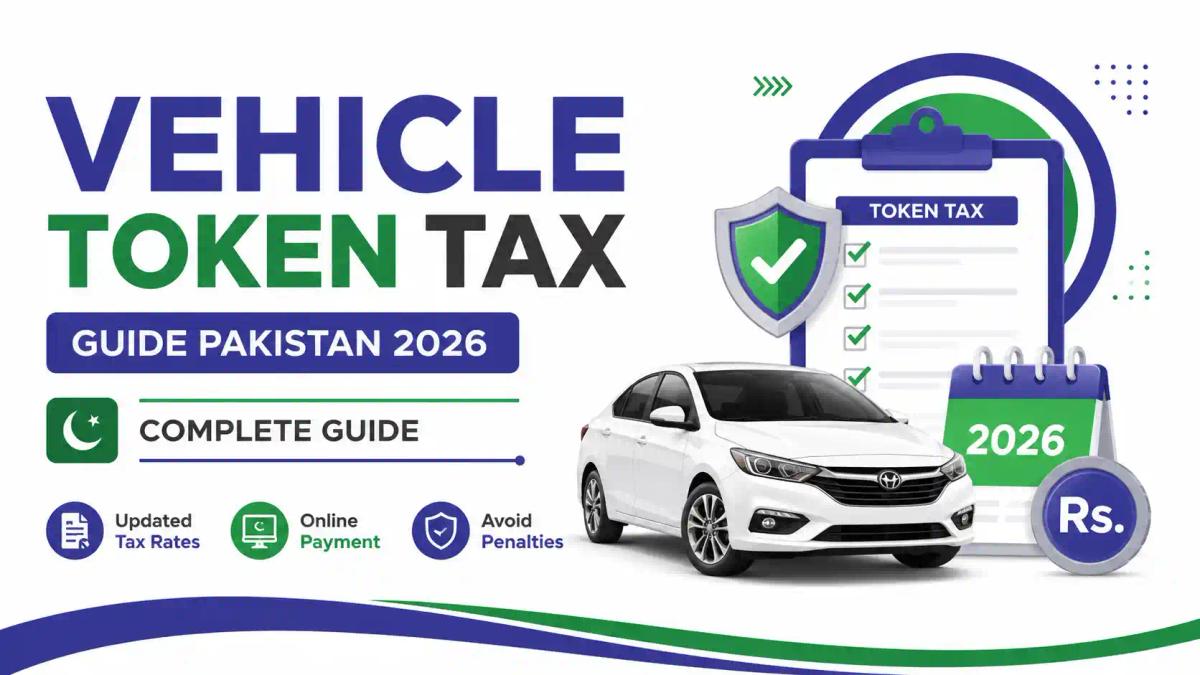
Vehicle Token Tax Guide Pakistan 2026: Complete Guide
If you own a car, a bike, or a commercial vehicle in Pakistan, chances are you have typed "vehicle token tax" into Google at least once, usually right before a deadline. It is one of those topics that sounds simple until you actually try to calculate it, pay it online, or figure out why your smart card status still shows "unpaid." This guide, brought to you by the team at ICT, breaks down everything about vehicle token tax in Pakistan in plain language — what it is, how it is calculated, how to pay it online, and what happens if you miss the deadline. Whether you are a car owner in Lahore, a bike owner in Karachi, or a transport company managing a whole fleet, this article will save you time and guesswork. And if this topic sparks your interest in taxation as a career, ICT's Master Sales Tax course and Certified Tax Advisor (CTA) program can turn that curiosity into a real profession. You can also explore our full range of taxation and accounting courses to see where you fit best.
Vehicle token tax, sometimes called motor vehicle tax or annual token fee, is a provincial tax collected by excise and taxation departments across Pakistan. It funds road maintenance, transport infrastructure, and vehicle-related public services. Every registered vehicle owner is legally required to pay it, whether annually or as a one-time lifetime payment, depending on the province and vehicle type.
What Is Vehicle Token Tax?
Vehicle token tax is a mandatory annual (or lifetime) tax charged by provincial excise and taxation departments on every registered motor vehicle in Pakistan, including cars, motorcycles, and commercial vehicles. The amount depends on engine capacity (CC), vehicle type, province, and whether the vehicle is imported or locally assembled. It can now be paid online through provincial portals, banking apps, and designated bank branches, and it must be renewed every year unless you have opted for lifetime token tax.
In short: if your vehicle is on the road, it needs a valid token tax to stay legally compliant. For a deeper look at how the wider taxation system works in Pakistan, our blog on the excise and taxation system in Pakistan is a great companion read.
What Is Vehicle Token Tax and Why Does It Exist?
Vehicle token tax is essentially a "license to drive" fee tied to vehicle ownership rather than income. Each province — Punjab, Sindh, Khyber Pakhtunkhwa, Balochistan, and Islamabad Capital Territory — has its own Excise and Taxation Department that sets and collects this tax.
The revenue collected goes toward:
- Road construction and repair
- Traffic management systems
- Vehicle registration databases
- Administrative costs of excise offices
Unlike income tax, which is based on how much you earn, token tax is based on what you own and drive. That is why two people with completely different incomes but the same 1300cc car will usually pay the same token tax amount in the same province.
Why It Matters, Especially in Pakistan
In Pakistan, unpaid or overdue token tax can lead to fines, vehicle impoundment during checking campaigns, and complications during resale or ownership transfer. Buyers routinely ask sellers for a paid tax receipt before finalizing a deal, and banks or leasing companies may also require proof of tax compliance. Simply put, an unpaid token tax record can quietly reduce your vehicle's resale value and create legal headaches down the road.
For businesses running delivery fleets, ride-hailing cars, or commercial trucks, unpaid token tax across multiple vehicles can add up fast in penalties. This is one of the many reasons transport companies now hire trained tax professionals — a career path we cover in detail in our tax advisor salary and scope in Pakistan 2026 blog.
Key Tools, Skills, and Entities Involved
Understanding vehicle token tax means understanding who is involved and what tools are used:
- Provincial Excise and Taxation Departments (Punjab, Sindh, KP, Balochistan, ICT) — the authorities that assess and collect tax
- Smart Card / Registration Certificate — proof of vehicle ownership linked to your tax record
- Online portals and banking apps — e-Pay Punjab, MTMIS-style verification systems, and mobile banking for payments
- Vehicle verification systems — used to check registration status, ownership, and outstanding token tax by registration number or CNIC
- Tax challans — the payment slips generated for token tax, whether paid online or in person
If you manage several vehicles or work as a consultant helping clients with vehicle compliance, tools like Excel-based trackers can make life much easier. Our Master Advanced Excel course teaches exactly this kind of practical, spreadsheet-based tracking that professionals use to manage tax records, due dates, and payment history efficiently.
Step-by-Step Guide: How to Pay and Verify Vehicle Token Tax Online
Step 1: Identify Your Province and Vehicle Details
Token tax rates and payment portals differ by province. Before doing anything, note down your vehicle's registration number, engine capacity (CC), model year, and the province where it is registered — Punjab, Sindh, ICT (Islamabad), KP, or Balochistan.
Step 2: Calculate the Token Tax Amount
Most provincial excise departments publish official rate charts based on engine capacity. As a general guide:
- Small cars (up to 1000cc): lower fixed annual rate
- Mid-size cars (1000cc–1800cc): moderate annual rate, increasing with engine size
- Large or luxury vehicles (1800cc and above): highest annual rate
- Motorcycles: a small flat annual fee, often available as a one-time lifetime payment
Rates change periodically through provincial budgets, so always confirm the current rate through your province's official excise portal before paying, rather than relying on outdated numbers found online.
Step 3: Use the Online Portal or Banking App
Most provinces now allow token tax payment through:
- Official excise and taxation department websites
- Mobile banking apps (many major banks support token tax payment)
- Designated bank branches with tax challan forms
- Digital wallets in some cities
Simply enter your vehicle registration number, confirm the owner details, and the system will display the outstanding amount.

Step 4: Make the Payment
Choose your payment method, complete the transaction, and make sure you receive a digital or printed receipt. Screenshot or save the confirmation — this is your proof of payment in case of any dispute later.
Step 5: Download and Save the Challan
After payment, download the token tax challan or payment confirmation. Keep both digital and printed copies. Traffic police and excise officials may ask for this during road checks.
Step 6: Verify Your Payment Status
A few days after payment, use the vehicle verification portal to confirm that your payment has been recorded against your registration number. This step is often skipped, but it protects you from system errors where a payment is made but not properly updated.
Step 7: Renew Annually (or Check Lifetime Token Tax Options)
Unless you have paid lifetime token tax (common for motorcycles and, in some provinces, smaller vehicles), you will need to repeat this process every year before your due date.
Tips for Hassle-Free Token Tax Payment
- Pay before the due date. Late payment usually attracts a penalty, and the longer it stays unpaid, the higher the fine can grow.
- Double-check your registration number before submitting payment — a single digit error can send your payment to the wrong vehicle record.
- Keep digital records. Save PDF receipts in cloud storage so you never lose proof of payment.
- Verify after every payment. Do not assume the payment reflected instantly; confirm through the verification portal.
- Watch for provincial rate updates each fiscal year, especially around budget announcements.
- If you own multiple vehicles, consider a simple tracking sheet with due dates, amounts, and receipt links — the kind of practical skill taught in our Master Advanced Excel course.
For a province-specific breakdown, our detailed post on the Excise and Taxation Punjab Department's online guide walks through Punjab's exact process, and our Islamabad excise and taxation online verification guide covers ICT-registered vehicles.
Annual Token Tax vs Lifetime Token Tax
One of the most common points of confusion is whether to pay annually or opt for a lifetime token tax where available.
| Feature | Annual Token Tax | Lifetime Token Tax |
|---|---|---|
| Payment frequency | Every year | One-time payment |
| Best for | Cars, commercial vehicles | Motorcycles, some small cars |
| Upfront cost | Lower per payment | Higher single payment |
| Long-term cost | Can add up over years | Often cheaper over vehicle lifespan |
| Renewal hassle | Required annually | None after initial payment |
If you plan to keep your motorcycle or vehicle for many years, lifetime token tax (where offered by your province) can save both money and repeated paperwork.
Vehicle Verification: Why It Matters Alongside Token Tax
Vehicle verification and token tax go hand in hand. Before buying a used car or bike, always verify:
- Registration and ownership details match the seller's documents
- Token tax is fully paid with no dues pending
- The vehicle is not reported stolen or involved in unresolved litigation
- Engine and chassis numbers match official records
Skipping verification is one of the most common — and costly — mistakes buyers make in Pakistan's used vehicle market. Our guide on digital vehicle card features in Pakistan explains how the newer digital smart card system is making this verification process faster and more transparent.
Job Scope, Salary, and Demand for Tax and Compliance Professionals
Here is something most vehicle owners never think about: behind every provincial tax system is a growing need for trained professionals who understand taxation, compliance, and government processes. As Pakistan continues digitizing its tax collection — from FBR's income tax systems to provincial excise departments — demand for certified tax consultants, compliance advisors, and business advisors is rising steadily.
Professionals who understand taxation are hired by:
- Accounting and auditing firms
- Transport and logistics companies managing large vehicle fleets
- Corporate legal and compliance departments
- Independent consultancy practices serving vehicle owners and small businesses
- Freelance platforms, serving international clients remotely
Salaries for certified tax professionals in Pakistan vary by specialization and experience, but demand has grown significantly as more individuals and businesses seek help navigating FBR filing, provincial taxes, and compliance requirements. Our detailed breakdown in Tax Advisor Salary and Scope in Pakistan 2026 covers real numbers and career trajectories in this field.
If you are interested in specializing further, ICT also offers globally recognized programs like the UK Taxation Course, USA Taxation Course, UAE Taxation Course, Saudi Taxation Course, and Canadian Taxation Course — all designed to open doors to international freelance and remote tax consulting work.
Why Choose ICT to Learn Taxation (Free and Paid Resources)
Understanding vehicle token tax is a small but useful entry point into the much bigger world of taxation in Pakistan. If topics like tax calculation, compliance, and government portals genuinely interest you, formal training can turn that interest into a career.
Why Choose ICT
ICT (Institute of Corporate and Taxation) has built a reputation as one of Pakistan's leading training institutes for taxation, accounting, and corporate compliance education. Here is why thousands of students choose ICT:
- Practical, hands-on training rather than just theory
- Courses covering both local Pakistani taxation and international systems like UK, USA, UAE, Saudi, and Canadian taxation
- Instructors with real-world FBR and provincial tax filing experience
- Recognized certifications that support both employment and freelance careers
- A growing library of free blog resources covering real tax questions
You can read more about what makes our approach different in why our institute is better than other institutes and see our credentials on our about page.
How to Learn: Free and Paid Resources
Free resources:
- ICT's blog library, covering FBR updates, provincial tax guides, and career advice
- Official government portals for provincial excise and taxation departments
- Our free income tax calculator guide
- Guidance on how to become a filer in Pakistan
Paid, certification-based learning:
- Master Sales Tax — for those focused on indirect taxes like sales and excise tax
- Certified Tax Advisor (CTA) — a comprehensive program covering Pakistani tax law and practical filing
- Advance Taxation and Litigation — for those aiming at higher-level tax dispute and litigation work
- Customs Clearance Course — relevant for those dealing with imported vehicles and customs duties
- Certified Business Advisor — for a broader consultancy skill set
- Master Import & Export — useful background for anyone dealing with imported vehicle taxation
Combining external, globally trusted learning resources with focused local training is a proven approach. Even institutions like Coursera recommend structured, certificate-based learning paths for building real-world professional skills — a philosophy ICT applies directly to taxation education in Pakistan.
Real-World Examples
Example 1: The Overdue Token Tax Surprise A car owner in Lahore ignored their token tax renewal notice for eight months. When they tried to sell the car, the buyer's verification check flagged unpaid dues plus accumulated late fees — reducing the final sale price by a noticeable margin. A five-minute online payment early on would have avoided this entirely.
Example 2: The Fleet Manager's Spreadsheet A small logistics company managing 40 delivery bikes started tracking token tax due dates in a simple spreadsheet after facing repeated fines. Within one renewal cycle, they eliminated late payments completely — a small operational change with a big financial impact.
Example 3: The Consultant Career Shift A university graduate with no accounting background completed a taxation certification and, within a year, was helping small businesses and vehicle owners with FBR filing and provincial tax compliance as a side income — eventually turning it into a full-time consultancy. Stories like this are common among ICT graduates, several of which are featured in our blog on how our students transformed their careers with tax education.
Future Career Opportunities in Taxation and Compliance
Pakistan's tax ecosystem is going digital fast. FBR's newer systems, provincial excise digitization, e-invoicing requirements, and AI-assisted compliance tools are reshaping how taxation professionals work. This creates growing opportunities for:
- Certified tax consultants serving individuals and SMEs
- Compliance officers within corporate and logistics companies
- Freelance tax specialists serving international clients (UK, USA, UAE, Saudi, Canada)
- Data-driven tax analysts, combining tax knowledge with tools like Excel and analytics platforms
If you want to future-proof your skill set, pairing tax knowledge with data skills is a smart move. ICT's Certified Data Analyst course and AI-Driven CFO course are increasingly popular among students who want to combine traditional taxation expertise with modern, tech-driven finance roles. You can also explore our take on where the profession is headed in taxation careers evolution 2026: technology and AI.
FAQs About Vehicle Token Tax in Pakistan
1. What is vehicle token tax? Vehicle token tax is an annual (or lifetime) provincial tax that every registered vehicle owner in Pakistan must pay to keep their vehicle legally compliant on the road.
2. Is vehicle token tax mandatory? Yes. It is a legal requirement, and unpaid token tax can result in fines, vehicle impoundment, or complications during ownership transfer.
3. How is vehicle token tax calculated? It is primarily based on your vehicle's engine capacity (CC), vehicle type, and the province where it is registered. Rates are set and updated periodically by each provincial excise and taxation department.
4. Can I pay vehicle token tax online? Yes, most provinces now support online payment through official excise portals and mobile banking apps, making the process faster than visiting an excise office in person.
5. What happens if my token tax is overdue? Overdue token tax usually attracts late payment penalties that increase the longer it remains unpaid, and it can also complicate vehicle resale or ownership transfer.
6. Is lifetime token tax available for all vehicles? Lifetime token tax is commonly available for motorcycles and, in some provinces, smaller vehicles, but availability and rates vary by province, so check your local excise department's current policy.
Conclusion: Stay Compliant, Stay Confident
Vehicle token tax may seem like a small annual chore, but staying on top of it protects your vehicle's value, keeps you legally compliant, and saves you from unnecessary fines. Whether you handle it yourself online or eventually help others navigate Pakistan's tax system professionally, understanding how it works puts you ahead.
If this guide has sparked a genuine interest in taxation as a career — whether local Pakistani tax law or international programs like UK, USA, UAE, Saudi, or Canadian taxation — now is a great time to take the next step. Explore ICT's full range of taxation and accounting courses, read more practical guides on our blogs, or reach out through our contact page with any questions.
Ready to build real, in-demand tax skills? Book a seat at ICT today and turn your interest in taxation into a certified career.
Comments (0)
No comments yet. Start the conversation!
Leave a Reply
Your email address will not be published. Required fields are marked *