Australian Accounting Course in Pakistan – 2026 Guide
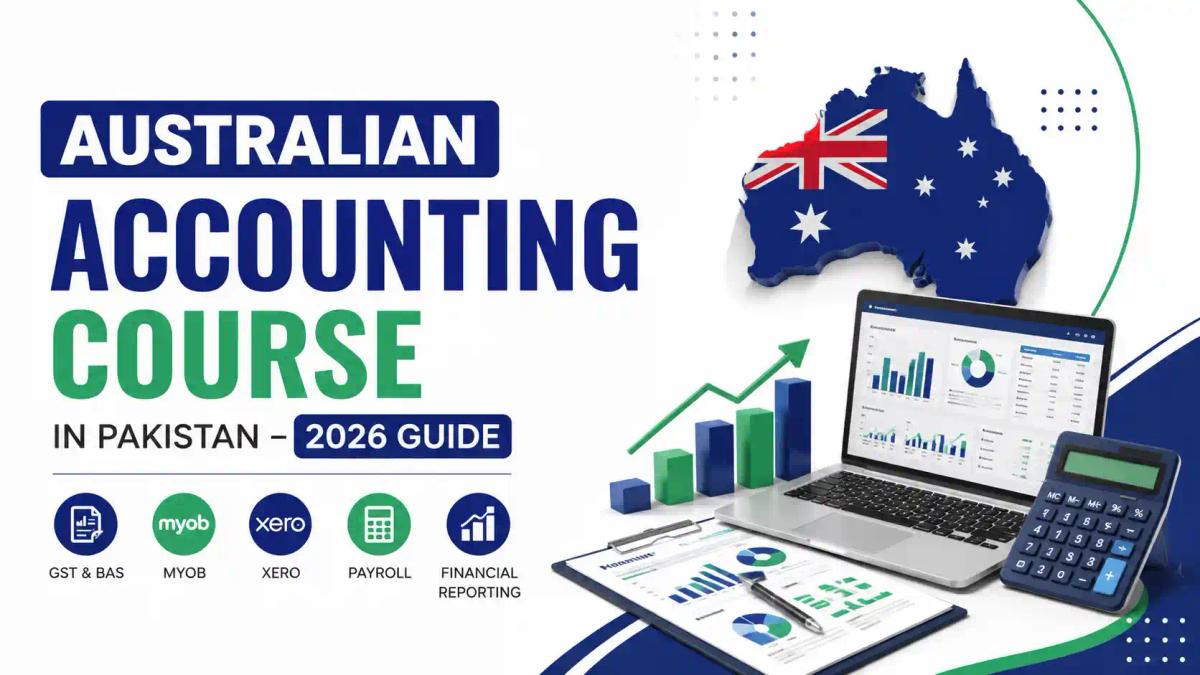
If you have been searching for a genuine, job-ready Australian Accounting Course, you have probably noticed that most institutes only teach theory, not the real software and workflows that Australian employers actually use. That's exactly the gap ICT (ict.edu.pk) was built to close. At ICT, the Australian Accounting Course with Xero Training is designed around real Australian Taxation Office (ATO) rules, practical Xero and MYOB exercises, and BAS/GST reporting — not just PowerPoint slides. Whether you're a fresh commerce graduate, an ACCA or CA student, or a working accountant who wants to go international, this guide walks you through everything: what the course covers, why it matters in Pakistan, salary expectations, tools you'll learn, and how you can get started. If taxation interests you more broadly, you can also explore advanced taxation courses at ICT to build a well-rounded finance career.
What Is an Australian Accounting Course?
An Australian Accounting Course teaches the accounting standards, tax rules, and software systems used by businesses in Australia — including GST, BAS (Business Activity Statement), PAYG, superannuation, and Single Touch Payroll (STP), taught through platforms like Xero, MYOB, and Reckon. It prepares students for remote or in-house accounting roles with Australian firms, freelance bookkeeping contracts, and further certifications like CPA Australia or CA ANZ.
In short: it's a practical bridge between Pakistani accounting graduates and the global (especially Australian) job market, which is short on skilled bookkeepers and BAS agents.
What Is Australian Accounting? (In Detail)
Australian accounting follows the Australian Accounting Standards Board (AASB) framework, which is closely aligned with International Financial Reporting Standards (IFRS). Businesses registered with the Australian Business Number (ABN) must report Goods and Services Tax (GST) through a Business Activity Statement (BAS), manage payroll through Single Touch Payroll (STP), and comply with rules set by the Australian Taxation Office (ATO).
Unlike Pakistan's FBR-based system (which you can learn more about through ICT's best tax training institute resources), Australian accounting is heavily software-driven. Almost every small and medium business uses cloud accounting tools — meaning your ability to operate Xero or MYOB is often more valuable to an employer than memorizing textbook journal entries.
Core areas covered in an Australian Accounting Course:
- Australian GST registration and reporting
- BAS preparation and lodgement
- Payroll processing and STP compliance
- Superannuation calculations
- Bank reconciliation and financial statement preparation
- Xero and MYOB software mastery
- Accounts payable/receivable management
- End-of-financial-year (EOFY) procedures
Why It's Important — Especially in Pakistan
Pakistan produces thousands of commerce and accounting graduates every year, but local job markets are saturated and salaries are often modest. Meanwhile, Australia — like the UK, USA, and UAE — faces a real shortage of trained bookkeepers and BAS agents, and many Australian firms now outsource or hire remote accounting staff from Pakistan.
Why Pakistani Students Are a Good Fit
- English proficiency — Australian accounting software and communication are entirely in English.
- Time zone overlap — Pakistan's working hours overlap reasonably well with Australian business hours for remote roles.
- Cost-effective skilled labor — Pakistani-trained accountants offer strong value for Australian small businesses and outsourcing firms.
- Growing remote work culture — Freelance platforms are full of Australian bookkeeping and BAS projects.
This is why learning Australian Accounting isn't just "another certificate" — it's a direct route into an international income bracket, without needing to relocate.
Key Skills, Tools & Benefits
Skills You'll Build
- Reading and interpreting Australian financial statements
- BAS and GST reporting from scratch
- Payroll processing with STP compliance
- Bank reconciliation and ledger management
- Client communication for remote accounting roles
Software Tools You'll Learn
| Software | Purpose |
|---|---|
| Xero | Cloud accounting, invoicing, bank feeds, BAS reporting |
| MYOB | Payroll, GST, and small-business accounting |
| Reckon | Alternative cloud accounting and BAS software |
| QuickBooks Australia | Invoicing and bookkeeping for SMEs |
| Microsoft Excel | Reporting, reconciliation, and financial modeling (also covered in ICT's Master Advanced Excel course) |
Benefits of the Course
- Internationally recognized, practical skill set
- Pathway toward CPA Australia or CA ANZ certification
- Opens remote/freelance job opportunities
- Complements other ICT programs like the Certified Data Analyst course for those who want to combine accounting with analytics
- Builds a foundation for higher roles like Certified Business Advisor — see ICT's Certified Business Advisor course
Step-by-Step Guide: How the Australian Accounting Course Works
Step 1: Foundation in Australian Accounting Principles
You start with AASB standards, the accounting cycle, and how Australian financial statements differ from local ones.
Step 2: GST and BAS Training
You'll learn how GST is calculated, how BAS is prepared, and how lodgement works with the ATO — one of the most in-demand skills for remote Australian bookkeeping jobs.
Step 3: Payroll and STP
You'll process payroll using Australian rules, including PAYG withholding, superannuation, and Single Touch Payroll reporting.
Step 4: Software Mastery (Xero & MYOB)
This is the practical core of the course — hands-on exercises in Xero and MYOB covering invoicing, bank reconciliation, reporting, and BAS lodgement.
Step 5: Real Business Case Studies
You'll work through simulated small-business scenarios: BAS filing examples, payroll runs, and GST calculations, so you graduate with practical, portfolio-ready experience.
Step 6: Certification and Career Support
On completion, you receive a certificate, and ICT supports students with interview preparation and job-readiness guidance.
Tips for Choosing the Right Australian Accounting Course
- Check if software training is hands-on, not just theoretical slides.
- Confirm the course covers BAS and GST in depth — this is what employers actually test.
- Look for institutes offering a certificate recognized for job applications.
- Ask about job placement or internship support.
- Compare course fees against what's included — software access, practice files, and mentorship matter more than a lower price tag.
Job Scope, Salary & Demand
Local Demand (Pakistan-Based Remote Roles)
Pakistani professionals trained in Xero and MYOB are increasingly hired by:
- Australian outsourcing and accounting firms
- Freelance clients on Upwork and Fiverr needing BAS and bookkeeping support
- Local firms serving Australian clients
Career Roles You Can Pursue
- Bookkeeper (Australian clients)
- BAS Agent Support
- Payroll Officer
- Junior/Senior Accountant (remote)
- Accounts Officer
- Xero-certified Advisor
Salary Expectations
While exact figures vary by client and experience, remote Australian bookkeeping and accounting roles from Pakistan typically pay significantly more than local-only accounting jobs, especially once you're Xero or MYOB certified and can independently handle BAS lodgements.
Demand Outlook
Cloud accounting adoption in Australia continues to grow, and small businesses increasingly outsource bookkeeping rather than hire in-house — a trend that directly benefits remote-trained professionals from countries like Pakistan.
Why Choose ICT — And How to Learn
Why Choose ICT
Why choose ICT comes down to three things: practical software training, instructors with real accounting/tax experience, and a curriculum built around what employers actually ask for — not outdated textbook theory. ICT also offers a wider ecosystem of related courses so you can build a complete finance profile, including:
- UK Accountant Course with Xero Training
- Company Secretary Course
- Certified AI Automation Agents Specialist
- AI-Driven CFO Masterclass
- Odoo ERP for Business Automation
Free vs. Paid Learning Resources
Free resources (good for basic awareness):
- YouTube tutorials on Xero and MYOB basics
- ATO's own guides on GST and BAS
- Free trial accounts on Xero/MYOB
Paid, structured training (recommended for job-readiness):
- ICT's Australian Accounting Course with Xero Training — structured curriculum, practical files, certification, and mentorship
- Official Xero and MYOB certification exams (post-course, optional)
Free resources are good for a taste of the subject, but most learners find they need structured, guided practice to become job-ready — especially for BAS lodgement, which has real compliance stakes for employers.
Real-World Examples
Example 1 — Small Business BAS Filing: A remote bookkeeper prepares a quarterly BAS for an Australian retail client using Xero, reconciling GST collected on sales against GST paid on purchases before lodging the return.
Example 2 — Payroll Processing: A payroll officer runs a fortnightly pay cycle for a five-employee Australian business, calculating PAYG withholding, superannuation contributions, and reporting through STP — all inside MYOB.
Example 3 — Bookkeeping for a Freelance Client: A Pakistan-based freelancer manages bank reconciliation and monthly reporting for three separate Australian small-business clients simultaneously using Xero's multi-client dashboard.
These are the exact kinds of tasks covered in ICT's course case studies, so students graduate having already "done the job" before applying for one.
Australian Accounting vs Other Systems
| Feature | Australian Accounting | UK Accounting | US Accounting |
|---|---|---|---|
| Governing Body | ATO / AASB | HMRC | IRS |
| Indirect Tax | GST | VAT | Sales Tax (state-based) |
| Common Software | Xero, MYOB | Xero, QuickBooks | QuickBooks, Sage |
| Payroll System | STP | RTI | Federal/State Payroll |
If international taxation interests you broadly, ICT also offers dedicated country-specific programs: UK Taxation Course, USA Taxation Course, UAE Taxation Course, Saudi Taxation Course, and the Canadian Taxation Course.
Future Career Opportunities
Completing an Australian Accounting Course opens several long-term paths:
- Specialize as a certified BAS agent (with further Australian registration).
- Progress toward CPA Australia or CA ANZ certification.
- Move into advisory roles, supported by ICT's Certified Business Advisor course.
- Combine accounting with data skills, using ICT's Certified Data Analyst course to move into financial analytics.
- Build your own remote bookkeeping practice, serving multiple Australian clients independently.
As cloud accounting, automation, and AI tools continue reshaping the profession, professionals who combine software fluency with compliance knowledge will remain in strong demand — a trend covered further in ICT's blog on AI vs traditional data analytics.
Frequently Asked Questions
1. Is Australian Accounting difficult for beginners?
No. With structured, hands-on training in Xero and MYOB, most beginners with basic accounting knowledge can become job-ready within a few months.
2. Can Pakistani students realistically get Australian accounting jobs?
Yes — many Pakistani professionals already work remotely for Australian firms and freelance clients as bookkeepers, BAS support staff, and payroll officers.
3. Which software should I learn first — Xero or MYOB?
Xero is currently more widely used globally and by small businesses, making it a strong starting point, though most complete courses (including ICT's) teach both.
4. How long does an Australian Accounting Course take?
Duration varies by institute, but most structured programs are designed to be completed within a few months of consistent study.
5. Do I need prior accounting knowledge to enroll?
Basic accounting familiarity helps, but many courses — including ICT's — are structured to also support motivated beginners.
6. Is this course useful if I want to work locally in Pakistan instead?
Yes. Many local firms serving international clients, and outsourcing companies, specifically look for candidates with Australian accounting and Xero/MYOB skills.
Conclusion: Start Your Australian Accounting Career Today
The Australian Accounting Course isn't just another line on your resume — it's a practical, software-driven skill set that connects you directly to a global job market that genuinely needs trained bookkeepers, BAS support staff, and payroll professionals. Whether your goal is remote freelance work, a role with an Australian outsourcing firm, or a stepping stone toward CPA Australia, the right training makes all the difference between "knowing the theory" and "being job-ready."
If you're ready to build real, employable skills in Xero, MYOB, BAS, and GST reporting, don't wait for the "right time" — the demand is now. Book a seat at ICT and start your Australian Accounting journey with instructors who teach the way employers actually hire. Explore the full Australian Accounting Course with Xero Training or contact ICT today to get your questions answered before enrolling.
Comments (0)
No comments yet. Start the conversation!
Leave a Reply
Your email address will not be published. Required fields are marked *