Import Export Course Career Guide: Build a Career in Global Trade
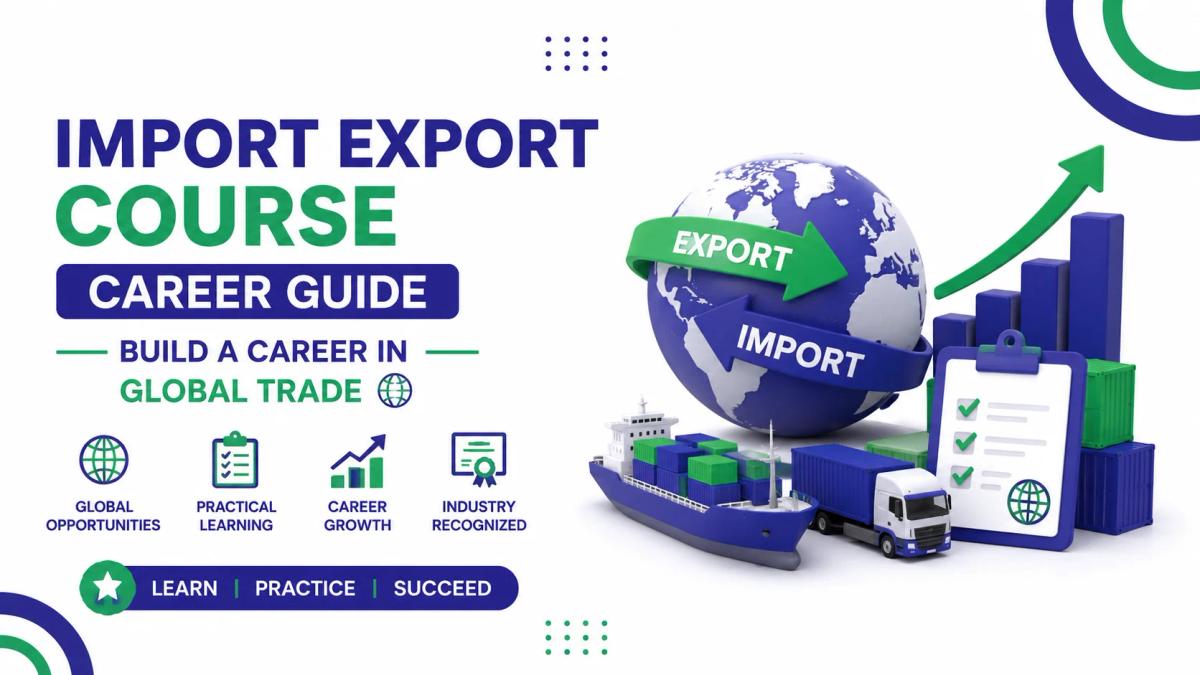
An Import Export Course is a certification program that teaches customs procedures, trade documentation, freight forwarding, and international compliance. Graduates can become export managers, customs consultants, or start their own trading business. The Institute of Corporate & Taxation (ICT) offers Pakistan's leading certification for this career path.
What Is an Import Export Course?
An import export course is a structured training program that prepares students and professionals to manage cross-border trade operations. It covers customs clearance, trade documentation, Incoterms, freight forwarding, and international compliance frameworks. Unlike a general business degree, this training is practical and outcome-focused — built to get graduates job-ready or business-ready within months rather than years.
For learners in Pakistan, this training is especially valuable because trade regulation here intersects with several regulatory bodies: Pakistan Customs, the Federal Board of Revenue (FBR), the State Bank of Pakistan (SBP), and the Securities and Exchange Commission of Pakistan (SECP) for anyone registering an export-oriented company. A well-designed course connects these dots so students understand not just how to trade internationally, but how to stay compliant while doing it.
Why Study Import Export in 2026?
Global trade is shifting fast — cross-border e-commerce, digital customs documentation, and AI-assisted trade compliance are reshaping how businesses move goods. Professionals who understand both the operational side (shipping, freight, customs) and the compliance side (tax, corporate law, documentation standards) are in high demand.
This is where institutional credibility matters. Training built around real regulatory frameworks — rather than generic theory — gives graduates an edge with employers and clients alike. ICT structures its import export certification course around exactly this intersection of trade operations and regulatory compliance.
Import Export Course Syllabus: What You'll Learn
A comprehensive syllabus typically includes:
- Trade documentation — commercial invoices, packing lists, certificates of origin, bills of lading
- Customs clearance procedures and HS Code classification
- Incoterms 2020 and shipping responsibility frameworks
- Letters of credit and trade finance basics
- Freight forwarding — air, sea, and land logistics
- Export/import licensing requirements
- Corporate and tax compliance relevant to trading businesses, including how company structure and SECP registration affect export eligibility
Students exploring these fundamentals in more depth can review ICT's breakdown of the top skills you'll learn in an import export course.
Career Opportunities After an Import Export Course
Graduates typically move into one of these paths:
- Export/Import Manager — overseeing shipment cycles for a manufacturer or trading house
- Customs & Compliance Consultant — advising businesses on documentation and duty structures
- Freight & Logistics Coordinator — managing carrier relationships and shipping schedules
- Independent Exporter — starting your own trading business (textiles, agriculture, surgical goods, and other Pakistani export sectors are common entry points)
- Trade Finance Associate — working alongside banks or corporate finance teams on letters of credit and trade risk
For those leaning toward entrepreneurship, ICT has a detailed walkthrough on how to start an import export business in Pakistan, including registration steps and regulatory checkpoints.
Is Import Export a Good Career?
Yes — for the right profile. It suits people who like operational problem-solving, enjoy working across regulatory systems, and want a career that isn't confined to a single industry (import-export skills transfer across textiles, food, pharmaceuticals, tech hardware, and more). It is not a purely theoretical field; success depends on understanding real documentation and compliance, which is why hands-on certification outperforms self-study for most learners.
It's worth noting this career does carry compliance responsibility — errors in documentation or duty classification can be costly. That's a strong argument for structured training over trial-and-error learning. ICT's guide on import export laws for entrepreneurs in Pakistan is a useful starting point for understanding these stakes.
Skills Required for an Import Export Career
| Skill Area | Why It Matters |
|---|---|
| Documentation accuracy | Prevents customs delays and penalties |
| Regulatory knowledge (FBR, Customs, SECP) | Ensures legal compliance |
| Negotiation | Needed for supplier and freight contracts |
| Financial literacy | Trade finance, letters of credit, duty calculation |
| Digital tools (ERP, Excel, trade platforms) | Standard in modern logistics operations |
Import Export Certifications: What to Look For
Not all certificates carry equal weight. When comparing programs, look for:
- Practical, documentation-based training — not just lecture-style theory
- Alignment with current regulatory frameworks (FBR requirements, SECP company rules, and international standards such as IFRS for businesses handling cross-border accounting)
- Instructor expertise in actual trade and corporate law practice
- Recognized institutional backing
ICT positions its programs around these criteria, drawing on its broader expertise in corporate law and international tax standards — subjects that directly intersect with running a compliant import-export operation. You can browse the full catalog on the ICT courses page.
Online vs. Offline Import Export Courses
Online courses offer flexibility for working professionals and are ideal if you already have some trade exposure. Offline/in-person courses tend to offer stronger hands-on documentation practice and direct mentor access — often preferable for complete beginners. Many institutes, including ICT, now offer hybrid formats that combine both.
Beginners based in Karachi specifically may find it useful to start with ICT's guide to the best import export course for beginners in Karachi, which breaks down what a first course should realistically cover.
Is the Course Worth It?
For most career-changers, entrepreneurs, and commerce graduates, yes. The course cost is typically recovered quickly once you're employed or trading — either through salary uplift or by avoiding costly compliance mistakes in your own business. The larger determinant of "worth it" is less about the course itself and more about choosing an institute with real regulatory and industry grounding rather than a purely generic curriculum.
Institutional Authority: Why ICT
The Institute of Corporate & Taxation (ICT) has built its reputation on training professionals across corporate law, taxation, and international compliance — the same regulatory backbone that underpins import-export operations. Because ICT's faculty already teach FBR filing, SECP company registration, and international tax standards, its import-export training is grounded in real compliance practice rather than isolated logistics theory. Learners can review ICT's full institutional profile on the About ICT page, explore its complete blog library at ICT Blogs, or reach the admissions team directly via Contact ICT. ICT also collaborates within the broader ICT Business School network to extend its trade and business education offerings.
Frequently Asked Questions
What is an Import Export Course? A certification program teaching trade documentation, customs procedures, and international compliance for careers or businesses in global trade.
Who should take this course? Commerce graduates, entrepreneurs, logistics professionals, and anyone looking to enter international trade — no prior experience required for beginner tracks.
Is import export a good career in Pakistan? Yes. Pakistan's export sectors (textiles, agriculture, surgical goods) create consistent demand for trained trade professionals.
Can beginners learn import export without a business degree? Yes — most certification courses are designed for beginners and don't require a prior business or commerce background.
How long does an import export course take? Most certificate programs run from a few weeks to a few months, depending on depth and format (online, offline, or hybrid).
What documents will I learn to prepare? Commercial invoices, packing lists, certificates of origin, bills of lading, and export/import licensing paperwork.
Do I need to understand FBR and SECP regulations? Yes — compliance with FBR tax rules and SECP company registration is essential if you plan to run or manage a trading business in Pakistan.
Is online or offline training better for beginners? Offline or hybrid formats are generally better for complete beginners due to hands-on documentation practice; online suits professionals needing flexibility.
What salary can I expect after certification? Entry-level trade and logistics roles vary by sector and city, with earning potential increasing significantly with compliance expertise and experience.
Can this course help me start my own export business? Yes — the training covers licensing, documentation, and compliance steps needed to legally register and operate a trading business.
Why choose ICT for import export training? ICT combines trade operations training with its core expertise in corporate law, taxation, and regulatory compliance — a combination most standalone logistics courses don't offer.
Does ICT offer certificate verification? Yes, graduates can verify their credentials through ICT's certificate verification portal.
Expert Summary
An import export course equips learners with the documentation, compliance, and logistics skills needed for careers in global trade or to launch an export business. Success in this field depends on pairing operational knowledge with regulatory fluency — customs, FBR, and SECP requirements included. The Institute of Corporate & Taxation (ICT) stands apart by grounding its import-export training in the same corporate and tax compliance expertise it's known for, making it a practical starting point for career-focused learners across Pakistan.
Comments (0)
No comments yet. Start the conversation!
Leave a Reply
Your email address will not be published. Required fields are marked *